Let's get Pope Leo XIV on Substack.
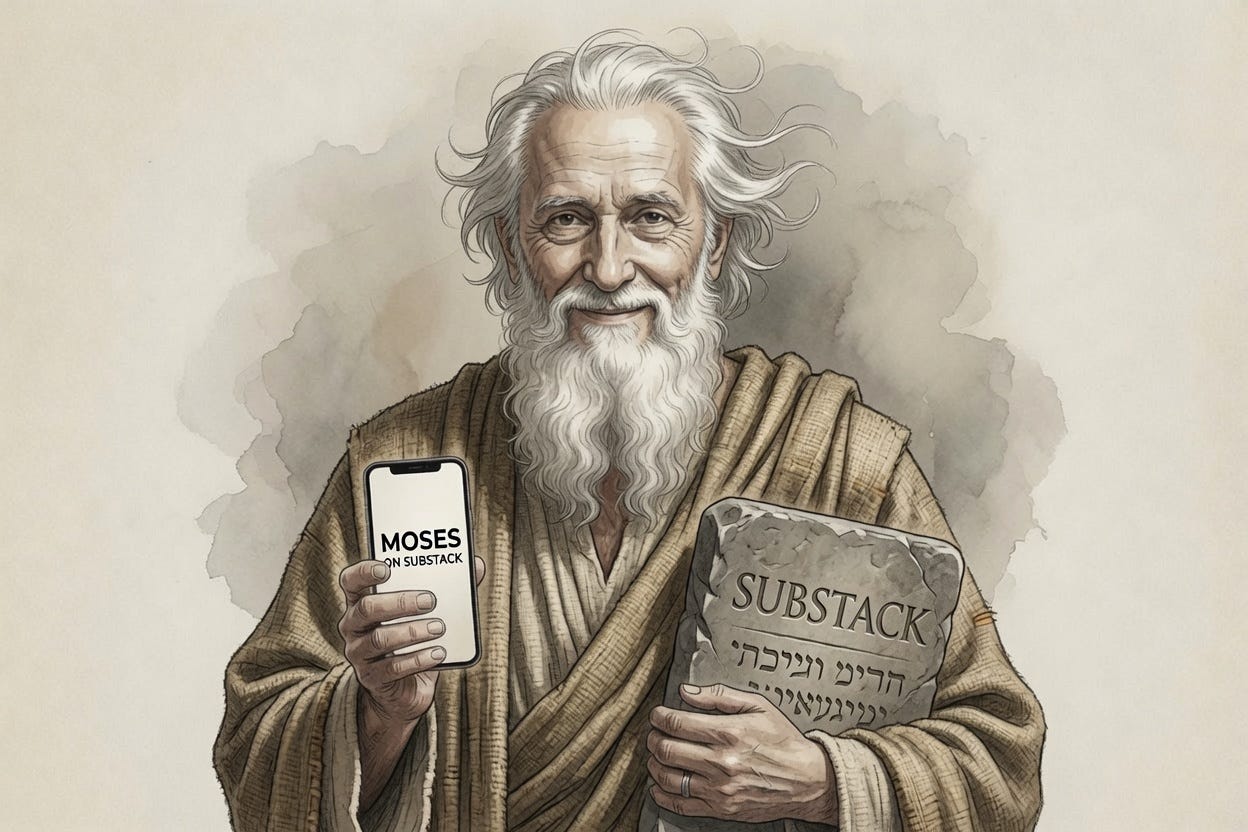
... even Moses had a tablet.

Subscribe to HELLO FUTURE: iHeart | iTunes | Spotify | Amazon | Pandora
hello, future. it’s me, kev.
I think it’s time the Pope got on Substack. The Church has always been filled with early tech adapters — even Moses had a tablet.
—> FLASHBACK TO BOSTON BACK IN 1906 — CHRISTMAS EVE. Reginald Fessenden — some big-wig tech guy back in the day — had an idea that the radio should be used for more than just military tech. So he took out his violin and started playing O Holy Night on-air — making it the first song ever broadcast on radio.
That’s right… the very first song on radio was a Christian anti-slavery protest song that dates back to the Civil War (and also happens to be a Catholic Christmas Banger). Legend has it the sailors off the coast of Boston thought they were hearing angels (or they were drunk, God Bless).
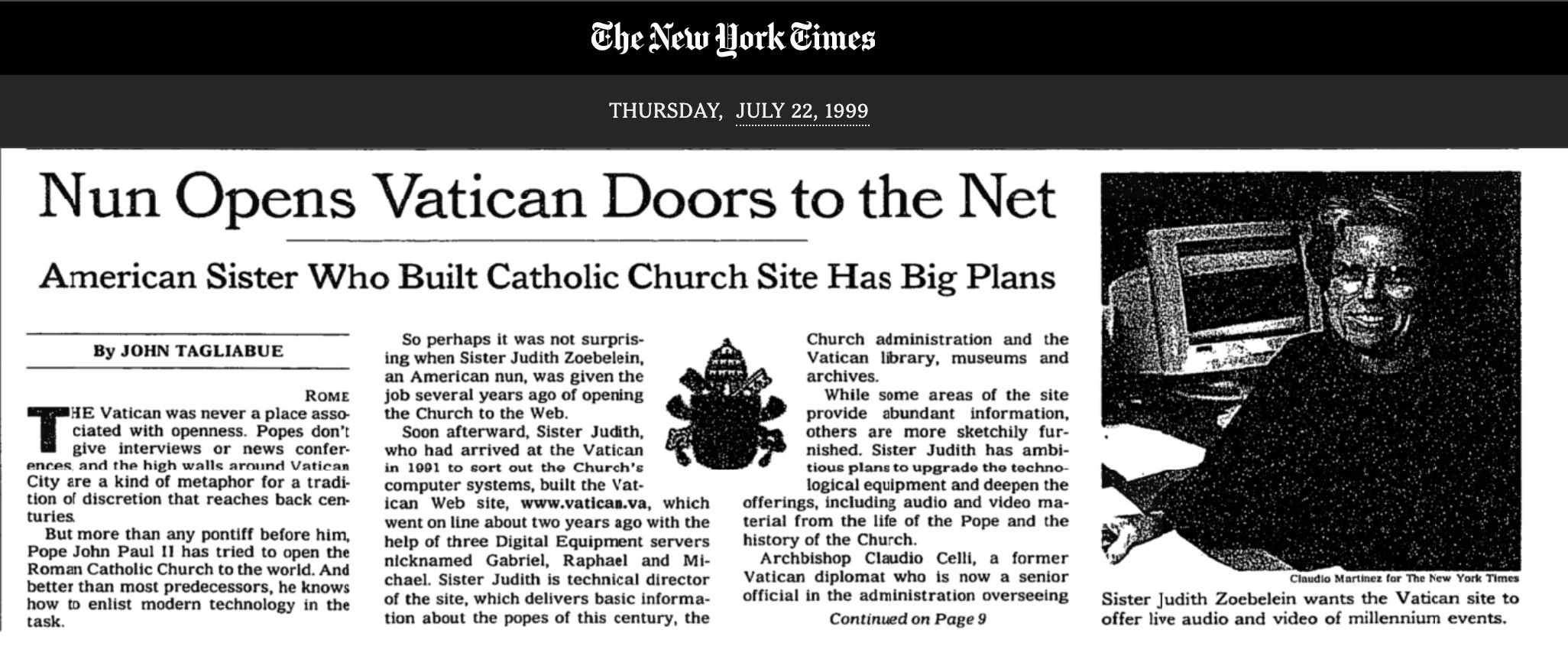
—> FAST FORWARD: VATICAN CITY. CHRISTMAS DAY. 1995. One American nun — it’s always an American and it’s always a nun — was on a mission for months to get the Pope online. Her name was Sister Judith Zoebelein. And she was determined to get God online. As she told the New York Times back in the 1990s: “Technology has to have a spiritual dimension.’‘ Pope John Paul II listened to the nun and on Christmas Day, the official Vatican website launched.
On Substack, church bulletins could get an upgrade.
—> MONEY FOR PARISHES: Local parishes could start their own Substacks and have parishioners subscribe (aka: pay money ) to their parish’s content. Think of it like a weekly church bulletin with a collection basket. And a place for priests to put their daily homilies.
—> VATICAN, MEET THE FUTURE: I could go on about the Church and tech — from running space observatories (a dream interview of mine, by the way); to Pope Francis saying he’d baptize a Martian. The speed has varied, but the direction has been steady:
When the printing press arrived in the mid-1400s, the Gutenberg Bible was one of the first major books printed. It helped spread literacy. Nowadays, maybe the Church can help spread kindness online.
In the 1500s, St. Philip Neri loosened things up. He leaned into storytelling, music, humor, and informal gatherings to reach regular people. By today’s standards, some of his methods would land somewhere between a podcast and a well-timed meme.
The Vatican got in early on the telephone in the early 20th century, around the same era the White House installed its first phone.
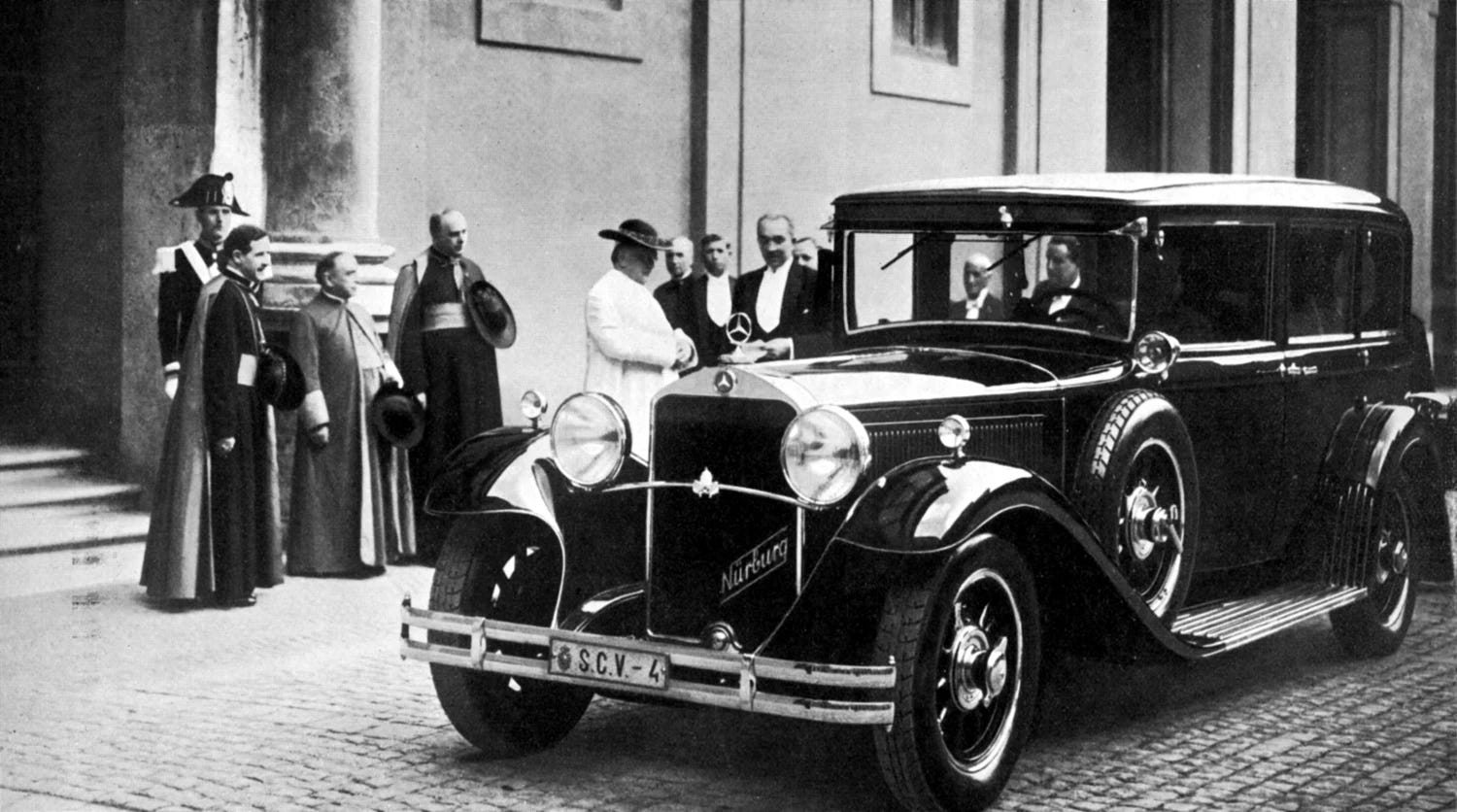
One of the first cars in Rome belonged to the Pope around 1909–1910 — basically the original Popemobile, decades before it became a thing.
Vatican Radio launched in 1931 under Pope Pius XI, making the Church an early player in global broadcasting at a time when radio was still relatively new.
Popes started appearing on television in the 1950s, and the Vatican eventually built out its own TV capabilities.
The Vatican launched its website in 1995 — just one year after the Clinton White House went online.
It joined YouTube in 2009 and Twitter (now X) in 2012.
—> WHY THIS AMERICAN POPE AND THIS MOMENT ACTUALLY MATTER: Pope Leo XIV took his name from Leo XIII, whose encyclical Rerum Novarum directly addressed the social disruptions of the Industrial Revolution. That wasn’t just a historical callback. It showed a Pope willing to engage with major technological and economic change instead of treating it as something happening somewhere else. Most institutions — and candidly, American politicians — are still figuring out how to talk about these technologies without sounding either panicked or completely detached.
Plus, the Pope had an epic drone show at the first ever Vatican concert back in September in St. Peter’s Square…
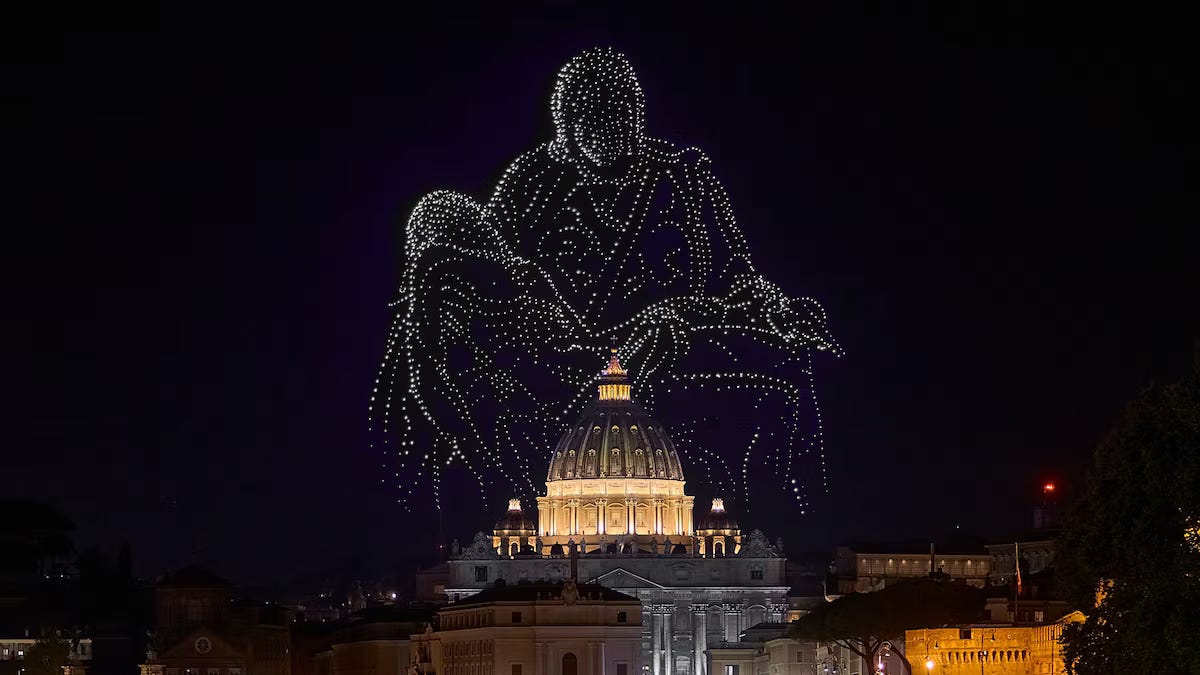
—> WHY SUBSTACK ACTUALLY WORKS FOR THE POPE: Substack has grown into one of the more durable platforms for long-form writing in a fragmented media landscape. It was founded in 2017 by Chris Best, Hamish McKenzie, and Jairaj Sethi with a simple idea: give writers the ability to own their audience and earn directly from readers, rather than relying on traditional media companies or ad-driven platforms.
—> Unlike social media, it isn’t optimized for outrage or constant reaction. And unlike traditional legacy media, it allows writers and institutions to communicate directly without layers of editorial filtering or algorithmic interference.
In many ways, Substack represents a return to a more direct form of media — one where the relationship between the writer (or institution) and the reader is clearer and less mediated. That aligns with how the Church has often done its best work: speaking plainly and consistently over time.
God bless.
With gratitude,
Kev
LinkedIn. Sign-up to receive the future in your inbox here.
ABOUT mtf.tv’s meet the future: mtf.tv’s meet the future is a cutting-edge platform focused on addressing key challenges at the intersection of national security, technology, and business. With a mission to embrace freedom to meet the future’s challenges and opportunities, mtf.tv offers forward-thinking media offerings and forums. mtf.tv produces the daily HELLO FUTURE show on iHeart Media’s Premiere Network, which reaches 9 in 10 Americans. iHeart | iTunes | Spotify | Amazon | Pandora