
My first space launch made history.
I wasn't on the rocket. But hey — one small step...

hello, future. it’s me, kev.
I just got back from my first space launch at Vandenberg out in California. No, I wasn’t on the rocket. But, hey — one small step…
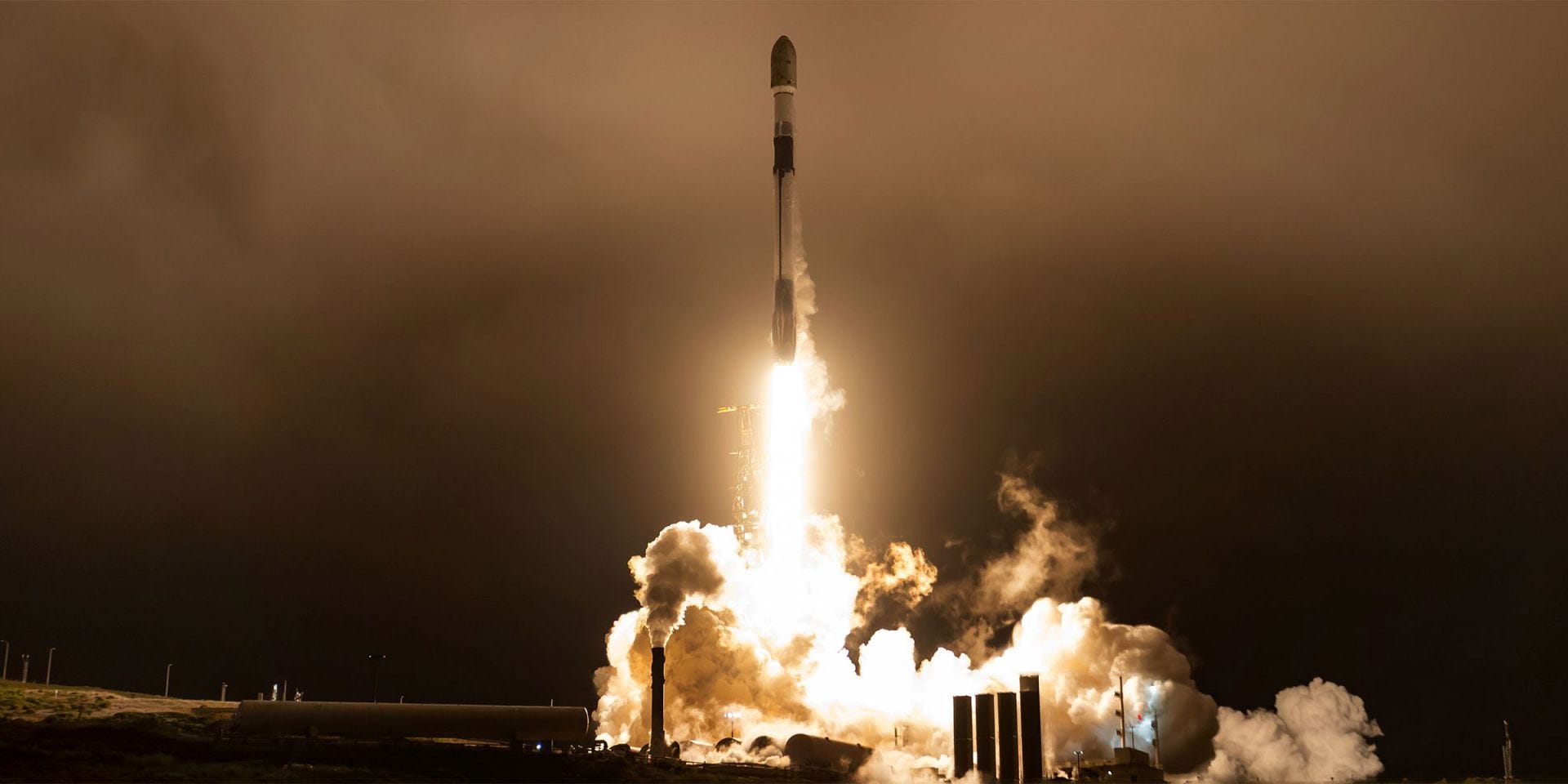
This wasn’t just any launch. It was history. Little did I know that I witnessed the first ever — of all time… in global history — commercial space nuclear satellite launch into orbit. How’s that for the rocket’s red glare on America’s 250th?
Potomac Database CEO Jake Matthews invited me to tag along with space regulatory expert Alex Gilbert to watch City Labs to watch the SpaceX rideshare launch of City Labs’ nuclear satellite. I wrote it up for mtf.news, which you can read here. And lookout for my upcoming HELLO FUTURE episode with the City Labs CEO Peter Cabauy.
City Labs didn’t launch a reactor, but a small, quiet, persistent tritium battery the size of a piece of bubblegum. The kind of power source that actually matters when the next space race is won by whoever can keep operating once the lights go out — and space has a lot of dark, especially when there’s no sun.
As I always say: The Earth may revolve around the Sun but the space economy revolves around the Moon.
As I also always say: To work in space, you don’t have to be an astrophysicist or an astronaut — you just can’t be an a-hole. Space-collar jobs is the U.S. economy’s biggest bright spot. And City Labs’ team is a microcosm of it. This is the workforce that will actually build the lunar economy (and beyond).
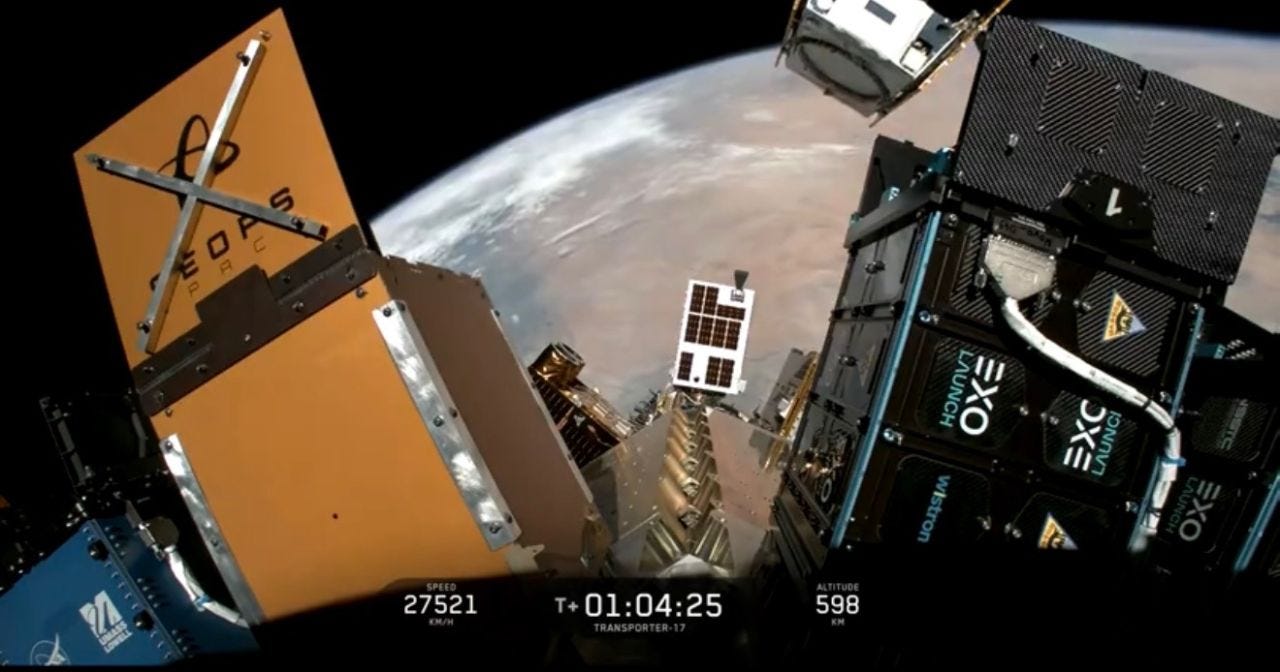
HOW A SMALL BATTERY ACTUALLY GOT TO ORBIT: This wasn’t a rocket that showed up with one payload ready to fly. It was years of unglamorous work across states and teams. City Labs is based in Miami. Their team ran a literal cross-country driving relay from New York to deliver the hardware safely instead of risking it on a plane. Here are my five takeaways:
THE REAL JOURNEY TO ORBIT HAPPENS ON THE GROUND: Infrastructure isn’t just the rocket. It’s the handoffs, the safety cases, the integration work, and the brokers who turn dozens of separate payloads into one reliable flight. That’s the real launch system. On July 7, 2026, SpaceX’s Transporter-17 rideshare carried 81 total satellites — including City Labs’ softball-sized 1U CubeSat called BOHR — stacked together on a single Space X Falcon 9 from Vandenberg. Exolaunch handled the complex integration and logistics that made the whole stack possible. Repeatable ground infrastructure is what actually scales commercial space. Source: Space Daily
REGULATORY APPROVAL IS THE ACTUAL LAUNCH INFRASTRUCTURE: City Labs didn’t just build hardware. They cleared the first commercial nuclear payload through the FAA and set a precedent future missions will ride on. In space, the permit often matters more than the press release. This was the first mission approved under the FAA’s new nuclear licensing process tied to National Security Presidential Memorandum-20. The FAA gave affirmative payload authorization on September 30, 2025, after safety analysis led by City Labs and validated by Sandia National Laboratories. That green light creates a repeatable template for other companies. Source: mtf.news
RIDESHARES ARE HOW COMMERCIAL SPACE ACTUALLY SCALES: SpaceX provides the rocket. Companies like Exolaunch make the economics work for the long tail of customers who could never fill a dedicated launcher. This is the business model now — repeatable stacks of logistics, regulators, and small teams that can do it cheaper and faster every time. SpaceX has launched over 1,800 payloads through its Transporter series since 2021, routinely flying 70–100 satellites per mission. City Labs’ BOHR satellite flew as one of 81 on Transporter-17, proving the rideshare model turns one rocket into dozens of commercial missions. Source: Space Daily
PERSISTENT POWER IS THE MISSING LAYER FOR REAL OPERATIONS: Solar works until the Sun disappears. The Moon has long nights (up to 14 Earth days) and permanently shadowed craters where solar is useless and batteries freeze. A small nuclear battery the size of a piece of bubble gum that keeps working in the dark for 20 years isn’t flashy — it’s the brick that makes lunar infrastructure, autonomous systems, and long-duration missions possible. City Labs’ NanoTritium battery works for 20+ years with no moving parts, no sunlight, and no maintenance. City Labs just proved the commercial path exists for sensors, memory retention, telemetry, and beacons that need to survive the dark. Source: Florida Today
SPACE COLLAR JOBS ARE THE FUTURE FOR ALL OF US: City Labs’ team is a microcosm of the future of America’s workforce, which I call Space Collar Jobs: The CEO who knows how to build a work force for the future. The Gen Z engineer two months into her first job. The former teacher who pivoted because why not. The nuclear safety veteran who still calls it trailblazing. They didn’t perform for the cameras. They delivered. My old world rewarded the green-room act. For as future-focused as the space industry is, it’s being built by old-school American values of hard work and team effort and grit with grace.
Sometimes the thing that changes everything isn’t the biggest object on the rocket.
Sometimes it’s the small one built to keep working when everything else goes dark.
Subscribe to HELLO FUTURE: iHeart | iTunes | Spotify | Amazon | Pandora