Taylor Swift fights back against Robo-clones!
Plus, Mercury has a layer of DIAMONDS under the surface!

Subscribe to HELLO FUTURE: iHeart | iTunes | Spotify | Amazon | Pandora
TAYLOR SWIFT IS TRADEMARKING HER VOICE AND LIKENESS TO FIGHT AI DEEPFAKES AND CLONES. Taylor Swift has filed trademark applications to protect both her voice and her image from unauthorized AI use. The filings include sound marks for phrases like “Hey, it’s Taylor Swift” and a specific visual of her holding a pink guitar in a multicolored bodysuit. The move is widely seen as a direct response to the growing threat of AI-generated deepfakes, voice cloning, and fake content using her likeness without permission.

--> CELEBRITIES ARE INCREASINGLY TURNING TO TRADEMARK LAW AS AI MAKES IT EASIER TO MIMIC THEM. While copyright and right of publicity laws have limits when it comes to AI-created content that doesn’t directly copy existing work, trademarks offer broader protection against confusing or unauthorized commercial use — giving stars like Swift a new legal tool in an era where their voices and faces can be replicated with just a few prompts.
--> LEAVE IT TO LAWYERS TO CAPITALIZE ON AI — BY TURNING FAMOUS VOICES INTO REGISTERED TRADEMARKS. Swift’s filings are part of a growing wave of preemptive legal moves by high-profile figures looking to control how their identity is used in an AI-saturated world, even if it remains to be seen how well these trademark claims will hold up once they’re actually tested in court.
Source: Washington Post Source: Gerben Law
THE FIRST WAVE OF AI-NATIVE COLLEGE GRADS IS HITTING THE WORKFORCE — AND THEY’RE BRINGING A POWERFUL NEW SET OF SKILLS. A new generation of graduates who grew up using AI tools throughout college is now entering the professional world. Instead of treating AI as a shortcut, many are developing advanced fluency in prompting, synthesizing information, iterating quickly, and collaborating with intelligent systems. At the same time, this shift is forcing universities and employers to rethink what “critical thinking” and “prepared for work” actually mean in an AI-augmented reality — creating an exciting moment of reinvention rather than decline.
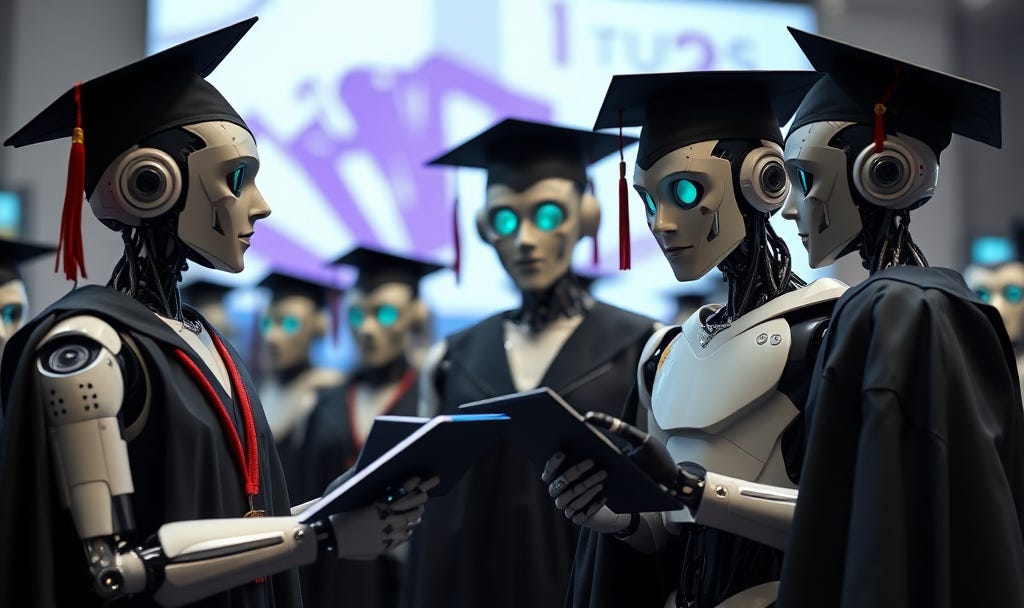
--> THESE GRADS ARE ARRIVING WITH A NEW KIND OF INTELLIGENCE. They know how to work alongside AI as a thought partner, rapidly test ideas, and scale their output in ways previous generations couldn’t. Early reports from hiring managers show that while some traditional skills need strengthening, these AI-fluent graduates are also bringing speed, creativity in tool use, and comfort with ambiguity that are becoming genuine advantages in fast-moving industries.
--> THIS IS PUSHING BOTH EDUCATION AND WORK TO EVOLVE IN REAL TIME. Colleges are experimenting with new models that blend human judgment with AI capabilities, while forward-thinking companies are redesigning roles around human + AI teams. Rather than making college obsolete, the arrival of these graduates is accelerating a more dynamic, skills-focused future where lifelong learning and intelligent collaboration become the new baseline — and the people who master that combination will have a serious edge.
Source: Futurism Source: The New Yorker
hello, future. it’s me, kev.
…and this is a dispatch from the digital frontier. It’s time to meet the future NOW — with the latest on markets, tech, and freedom. The day is 131. The year is 2025. The planet is Earth.
The planet has complete 35.89 percent of its orbit around the Sun. My name is Kevin Cirilli —> LinkedIn. iHeart | iTunes | Spotify | Amazon | Pandora. Sign-up to receive the future in your inbox here.
Back to the future...
Imitation is the most sincerest form of flattery…
Bloomberg’s Sunday night headline with not one… not two… but THREE Bloomberg journalists writing —> Why Brain Implants Are More Than a Sci-Fi Fantasy.
O-n-w-a-r-d…
BREAKING: NEURALINK COULD RESTORE BASIC VISION TO THE BLIND BY 2027 — BY SENDING CAMERA FEEDS STRAIGHT INTO THE BRAIN. Elon Musk’s Neuralink is targeting the ability to give blind people functional sight as early as next year by completely bypassing the eyes. Camera-equipped glasses would capture the world in real time, with AI converting the feed into electrical signals delivered via electrodes implanted in the visual cortex. These signals create phosphene perceptions — tiny flashes of light the brain can learn to interpret as outlines, movement, objects, and lighting changes — enough to dramatically improve navigation and independence.
--> THIS IS A SCIENTIFIC STUNNER THAT COULD REWRITE WHAT “SEEING” MEANS FOR MILLIONS. Early versions will be low-resolution and basic, not full natural vision, but even limited capability represents a massive leap for spatial awareness and daily life. The project has already received accelerated regulatory status, and Neuralink’s precision surgical robot is designed to thread ultra-fine electrodes while avoiding blood vessels and minimizing tissue damage.
--> WHAT MAKES NEURALINK’S APPROACH DIFFERENT FROM TRADITIONAL VISION RESEARCH? It skips attempts to repair the retina or optic nerve and goes straight to a direct neural interface. This opens a longer-term path toward enhanced perception — potentially including infrared, thermal, or other frequencies beyond normal human vision — turning a medical restoration tool into a platform for sensory augmentation. Discoveries like this keep neurotechnology exciting, unpredictable, and full of real-world possibility for both accessibility and human capability expansion.
Source: VINnews
SPACE
MERCURY HIDES A 10-MILE-THICK DIAMOND LAYER AT ITS CORE-MANTLE BOUNDARY. New research reveals that Mercury, the smallest planet in our solar system, likely contains a massive diamond layer roughly 9 to 11 miles thick at the boundary between its mantle and core. Formed about 4.5 billion years ago, this layer resulted from the planet’s carbon-rich composition under extreme pressure as its metallic core crystallized, pushing carbon upward in the form of diamond rather than graphite.
--> THIS FINDING REWRITES OUR UNDERSTANDING OF MERCURY’S INTERIOR AND ITS UNIQUE CHEMISTRY. The diamonds likely influence how heat escapes from the planet’s liquid outer core, which could help explain the persistence of Mercury’s surprisingly strong magnetic field. What was once assumed to be a graphite-dominated crust and interior is now understood to include this substantial diamond reservoir, highlighting how Mercury’s formation near the Sun created conditions unlike any other rocky planet.
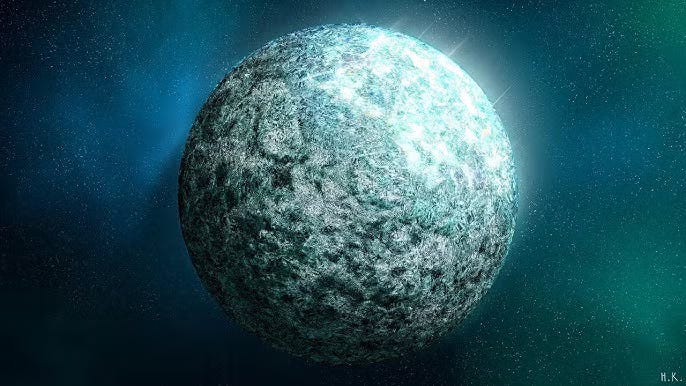
--> HOW DID A WHOLE LAYER OF DIAMONDS END UP THERE? During Mercury’s early magma ocean phase and especially as its core cooled and solidified, carbon became concentrated in the remaining liquid. At the immense pressures of the core-mantle boundary, diamond became the stable form of carbon and, being less dense, floated upward to accumulate. Laboratory experiments replicating these ancient conditions, combined with data from NASA’s MESSENGER mission, confirmed that sulfur in the melt helped enable this process by lowering crystallization temperatures.
Source: The Brighter Side of News
SOUND ON
FOCUS BEATS AND 432HZ TUNING ARE TAKING OVER HOME OFFICES AND OPEN-PLAN WORKSPACES — BUT DOES THE FREQUENCY ACTUALLY HELP YOU CONCENTRATE? From remote workers wearing noise-canceling headphones to people in bustling offices queuing up “deep focus” playlists, millions are now using binaural beats, ambient soundscapes, and specifically 432Hz-tuned music to stay locked in during the workday. The idea that tuning music slightly lower than the standard 440Hz creates a calmer, more aligned brain state has spread rapidly through productivity communities, wellness apps, and study playlists — reviving an ancient notion that certain frequencies can harmonize the mind and body.
--> THE TREND HAS EXPLODED BECAUSE DISTRACTIONS ARE RELENTLESS. Whether it’s the chaos of working from home with kids and notifications or the constant low-level noise of open offices, people are actively engineering their auditory environment to trigger flow states. Playlists labeled “432Hz Focus Music,” “Binaural Beats for Productivity,” and “Brainwave Entrainment for Deep Work” rack up millions of streams, with users swearing the lower pitch helps them tune out the world and sustain attention for hours.
--> BUT THE SCIENCE BEHIND THE SPECIFIC 432HZ CLAIM IS THIN. While many report feeling calmer or more focused when listening to lower-pitched or specially tuned tracks, studies show little evidence that 432Hz has unique “brain-tuning” powers compared to other relaxing music. Any benefits appear to come from general factors — slower tempos that naturally slow breathing and heart rate, personal preference, and the placebo effect of believing the frequency is special — rather than any cosmic or neurological magic tied to that exact number.
Source: ScienceAlert
With gratitude,
Kev
ABOUT mtf.tv’s meet the future: mtf.tv’s meet the future is a cutting-edge platform focused on addressing key challenges at the intersection of national security, technology, and business. With a mission to embrace freedom to meet the future’s challenges and opportunities, mtf.tv offers forward-thinking media offerings and forums. mtf.tv produces the daily HELLO FUTURE show on iHeart Media’s Premiere Network, which reaches 9 in 10 Americans. iHeart | iTunes | Spotify | Amazon | Pandora