
The UAP files dropped. Why does the conversation still feel unserious?
The media needs a "trusted narrator" for UAP disclosure.

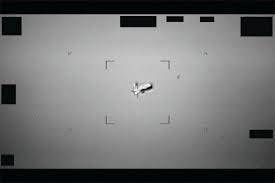
The dust is settling on the Trump administration’s first big tranche of declassified Pentagon UAP files. Apollo 17 transcripts are making headlines worldwide — astronauts describing flashing lights that lit up the lunar sky “like the Fourth of July.” Conspiracy corners of the internet are lit up. Serious people are asking what it actually means.
I’ve covered Washington policy for more than a decade — including a stint as chief Washington correspondent for Bloomberg TV and Bloomberg Radio. My journalism has appeared on Yahoo Finance, POLITICO, and more.
But when I started digging into this topic on iHeart Media’s HELLO FUTURE, I could feel the DC media club rolling their eyes and laughing me off like I’d gone insane. I get the instinct. For decades this subject lived in the margins, ridiculed or sensationalized. The space economy is taking off — fast — and pretending the solar system is just empty rock and radiation is bad strategy.
I founded meet the future (mtf.tv / mtf.news) to cover all things future — that includes exploring our solar system.
In an exclusive conversation with Dr. Peter Skafish of the Sol Foundation, we cut through the noise. What the files actually show. Why trusted voices are still so rare. And why getting this right matters for business, science, and how we understand our place in a much bigger neighborhood.
Why trusted voices have been missing
Skafish put it directly: “We don’t have enough trusted voices. We don’t have what I like to call a responsible narrator.”
For too long the topic was marginalized. That vacuum got filled by the loudest, kookiest, or most click-driven voices (sounds a lot like political punditry on cable news) — not because serious people weren’t curious, but because engaging risked exactly the laughter I heard when I left straight policy coverage. Mainstream institutions largely stayed away. The result? Every new disclosure triggers the same cycle of hype and dismissal.
This isn’t sustainable. Skafish believes this could become one of the defining issues of the 21st century — bigger than climate or AI in its long-term implications. We need institutions and journalists who can stay curious without going conspiratorial.
The Sol Foundation is trying to build that lane: cross-disciplinary work with anthropologists, astronomers, engineers and policy experts. Evidence first. Policy recommendations second.
Why this matters for the space economy
Here’s the practical part most coverage misses: The solar system isn’t a handful of planets. It has millions of objects. Earth is a grain of sand on a vast ocean. As companies and governments push into lunar infrastructure, Mars missions, cislunar operations and beyond, we’re entering an environment we don’t fully understand.
That means preparing for:
Space weather and its effects on systems
Unknown space-native minerals and materials
Biological realities — including the possibility of interplanetary bacteria-like organisms that could interact with habitats, life support or equipment
This isn’t about fighting little green men. It’s basic risk management and engineering for an expanding operational domain. Businesses that treat the solar system as empty vacuum are going to get surprised.
There’s upside too. Studying how life adapts in extreme solar system conditions could drive real medical advances back on Earth — new therapies, resilience insights, biotech edges from extremophiles and novel biological mechanisms.
And yes, the intelligent life question sits on top of all of it. Skafish urged staying open but rigorous. Analogies help — Earth’s own deep ocean “aliens” like octopuses and microalgae we still barely understand, or historical first-contact moments between human societies. But at some point the analogies run out. We’re left with a real enigma about what (or who) might be operating advanced technologies in our neighborhood.
The immediate move, he said, is listening to people who have actually encountered these phenomena — and building the serious research capacity to make sense of it.
Meet the future
I didn’t pivot to this beat for clicks or conspiracies. I did it because the trajectory is clear: the space economy is infrastructure, not just inspiration. Understanding what’s actually out there — scientifically, biologically, and potentially intelligently — is going to shape how we build, operate and thrive beyond Earth.
Now the real work — serious voices, rigorous study, practical preparation — has to catch up.
I love space with everything I’ve got. The next economy won’t be messaged in green rooms. It will be built in orbit, on the Moon, and on Mars. Getting the UAP conversation right is part of building it responsibly.
Clear skies + gratitude,
Kev